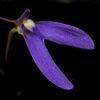
Martin Hingst Posted January 21, 2007 Report Share Posted January 21, 2007 Hello, I am growing this species for 3 years now quite successfully and want to describe here my technique and experiences that might be of interest when starting a setup for this or similar aquatic utricularia or aldrovanda. Tank dimensions My tank has 12 l, I found it easier to stabilize an aquarium with bigger volume, so I suggest not to go smaller – the bigger the easier to keep it stable. Water parameters Soft water is mostly recommended for utricularia. But too soft water is a difficult thing – it can easily run out of control. I use a mixture of RO water and a quarter of tap water. That yields in a carbonate value of 5°dKH (german unit of measurement, i.e. 1.8 mmol/l of soluble carbonates) and 8°dH (i.e. 1.5 mmol/l overall alkaline earth ions). The carbonate works as a buffer for the acidity and the carbon availability and can help a lot to keep the water parameters constant, esp. when adding CO2 to the water. pH level is 6.5, I would recommend a slightly acidic range, but not below 6. Nutrients I always found it very helpful to add CO2 to the water – that keeps the pH level down and provides the necessary carbon to the plants. Carbon is one of the limiting factors for the growth of submerged plants. Some people add sedge litter or something similar to the water; this also works well. For me it is easier to add CO2 produced by yeast fermentation of a sugar solution (see http://www.cpukforum.com/forum/viewtopic.p...b601df5841de76). The other nutrients are provided by the amount of tap water. Diluted by the RO water, the concentrations are in a good range – and in a good balance, as the natural water normally contains the important ions in a balanced relation. Some ions like Fe or K might be a bit low though, so when the plants are in full growth I add a bit of an P- and N-free aquarium fertilizer from time to time. Of importance is a regularly water exchange of about 1/3 of the old water by fresh one every 1-2 weeks. Soil Not that important I think, I use a 1:1 peat/sand mix and cover it with a 2cm layer of limefree sand. Light My tank is placed on an east-facing window sill. In summer I cut down the light from the window side by a peace of paper. From autumn to spring it gets art. lighting by a 23W energy saving lamp. Temperature U. volubilis is a winter growing species. In summer where the temps. are about 25-30°C/day and 20-25°C/night it goes dormant. In winter day temperatures are around 23°C, night temperatures about 15-18°C. A drop in the night is beneficial. The hardest part – the beginning In the beginning each new aquarium has to find its balance. That is the time for algae which can cope better with varying conditions than higher plants and tend to take over. To stabilize the tank and push back the algae, floating plants (that are not so depending on the water conditions) with a high growth rate like Salvinia, Pistia or Eichhornia are helpful in cutting down the light level, taking up excess nutrients and provide oxygen to the water. Submerged, fast growing plants like elodea or ceratophyllum to the same thing under water. Once the higher plants are established, they will outcompete the algae because of their more efficient metabolism. This is the time to introduce more sensitive plants like u. volubilis or aldrovanda. I then stepwise reduce the floating plants for better light conditions, but keep most of the submerged helping plants in there. For me u. biloba does this job, another suitable plant I found is rotala rotundifolia. My technique To make any manipulations like cleaning of the equipment easier, I placed all the technical stuff in an extra plastic box. This is first a small heater to provide day temperatures in winter of 23°C. More important is a little pump packed in filter sponge that does the water circulation and filtering. It pumps the water via a hose into the tank. An U-tube connects the tank to the plastic box to close the water circuit. Also a half liter bottle for the CO2 production is placed in the box. The CO2 is connected to the hose coming from the pump. This helps dissolving the gas on its way into the tank. All this may sound a bit dogmatical… I know of growers who have comparable success with less technical effort. But I like to have the things under control, and it works quite well, so it’s worth it for me. So here what I think are the main points in short notice: - stable water parameters, best achieved by regularly water exchange - avoiding stagnant conditions (water circulation, drop of temperature in the night) - fast growing plants as companions - few but sufficient and constant amount of nutrients - as much light as the plants can take without algae start to take over Here is a picture of the thak this summer.The plants to be seen are mostly u. biloba. And a picture of u. volubilis this week just coming back into growth. The plant has two different kinds of traps - short stalked, bigger ones that are close to the ground or even in the soil and smaller ones at the tips of the leaves. Maybe two strategies for different kind of prey. Regards Martin Quote Link to comment Share on other sites More sharing options...
chug Posted January 22, 2007 Report Share Posted January 22, 2007 Great guide for growing some nifty plants. :) Looking forward to seeing more pictures of your setup and the plants you grow! Thanks for the information, should help me when I set up a tank! :) Cheers Quote Link to comment Share on other sites More sharing options...
Rob-Rah Posted February 21, 2007 Report Share Posted February 21, 2007 Hi, I have been growing this for a few years too (I think from you, possibly). Mine is in the cool greenhouse, in a submerged pot, sharing a tank with a small U. inflata. Temps get down to 2C in the air on a winters night. I have some sedge in the tank too, to help about algae, but the tank has been stabilised for 3 years now, so no worries on that front any more. It seems to grow all year quite happily, and I have never seen it dormant. I wonder if you managed to flower yours though? And what you think the conditions for flowering might be? Cheers. Quote Link to comment Share on other sites More sharing options...
Martin Hingst Posted February 21, 2007 Author Report Share Posted February 21, 2007 Hi Rob, maybe it`s because of your rel. mild summers in the UK that your plant does not go dormant. Last summer we had weeks of high temperatures close to 40°C, with night min. above 25°C in the tank- I would guess your temperatures do not often reach the 30°-level. Sorry, no flowers so far, but I know of others who had more success. I think this is at least in part due to the photoperiod. In the past I used to give the plants constant light of about 13 hours, something I have changed this year to a more natural photoperiod, with already great success with some other AUS utricularia (e.g. see my u. fulva thread). This spring I will know more. Regards Martin Quote Link to comment Share on other sites More sharing options...

Recommended Posts
Join the conversation
You can post now and register later. If you have an account, sign in now to post with your account.